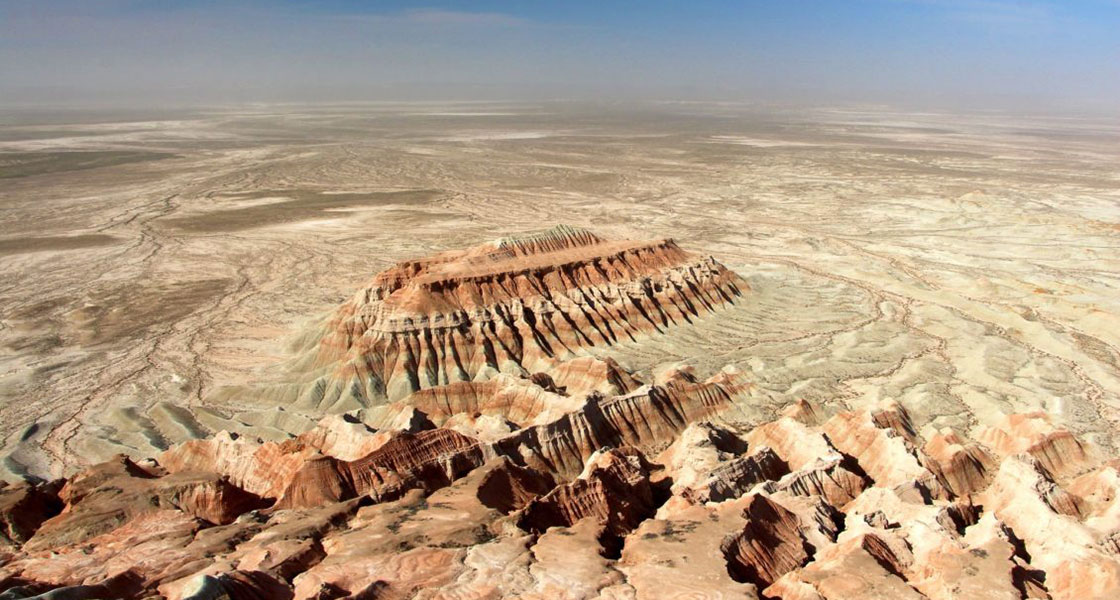
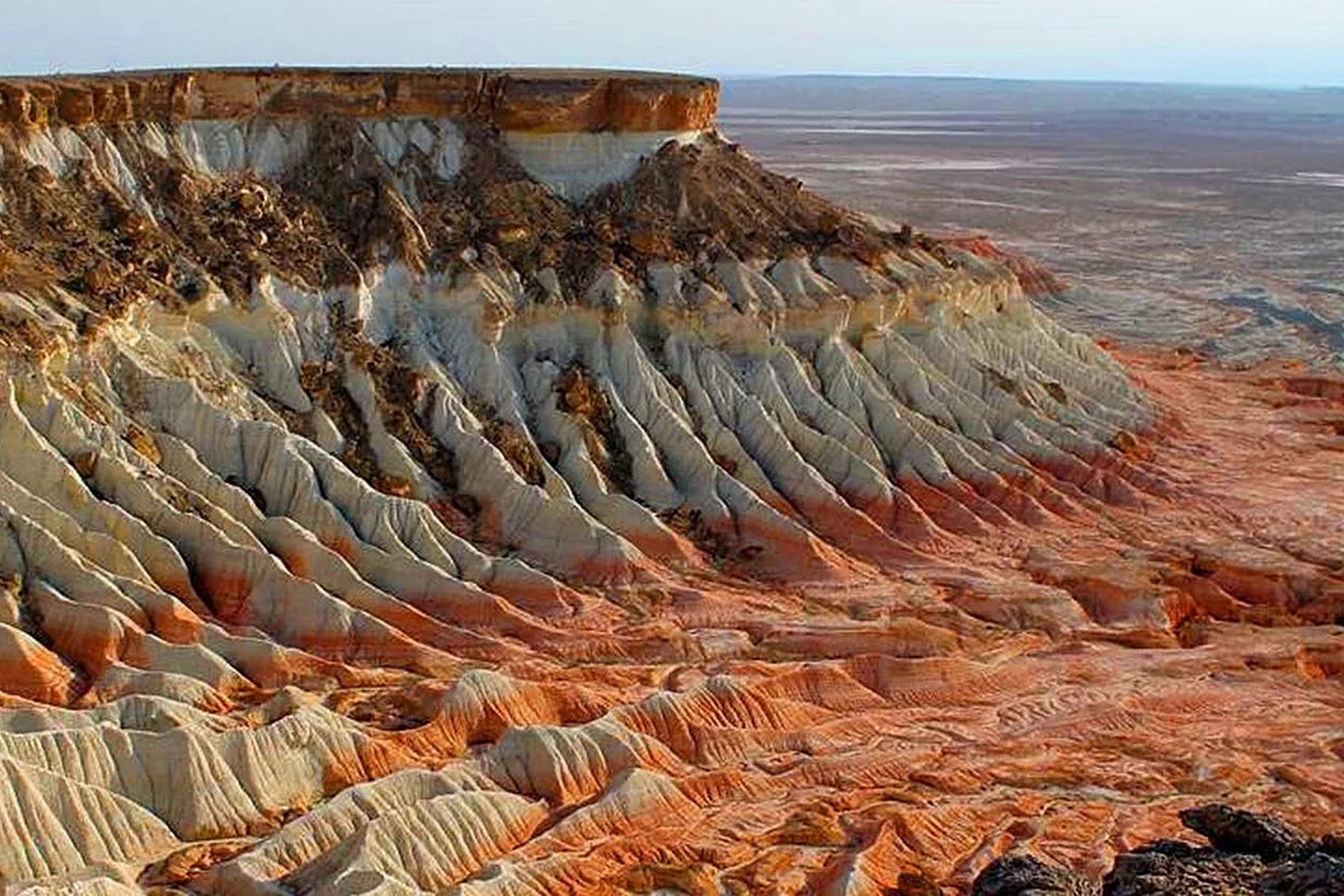
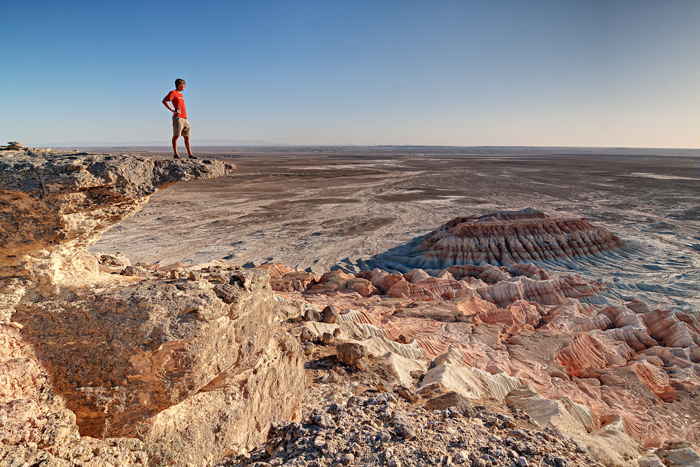
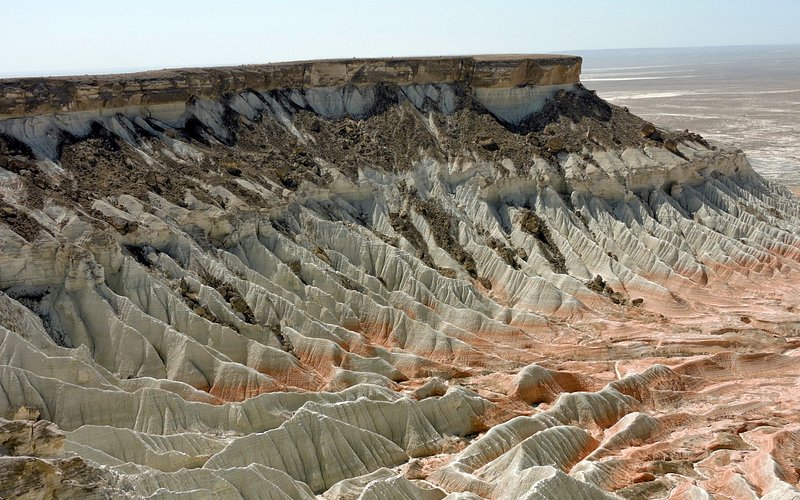
Yangykala canyon, often dubbed the “Grand canyon of central Asia,” is nestled in the Balkan region of Northwestern Turkmenistan, approximately 160 Km East of Turkmenbashi and 160 kmNorth of Balkanabat. The name “Yangykala” translates to “Fiery fortress,” A nod to the canyon’s vibrant, flame-like hues.
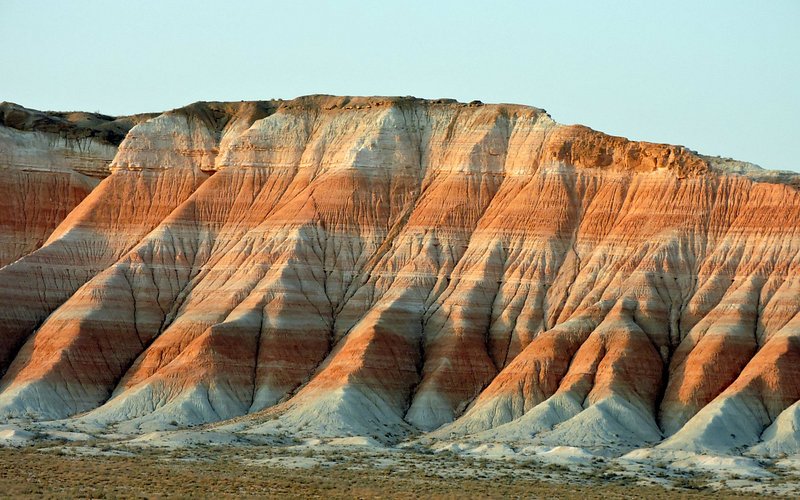
The canyon’s formation dates back about 5.5 million years, shaped by the receding waters of the ancient Tethys sea. As the sea withdrew, it left behind a landscape of limestone cliffs and deep gorges, which Erosion has sculpted into the dramatic formations seen today. The canyon’s walls showcase a palette of reds, pinks, whites, and greens, creating a surreal, almost martian landscape.
Crocodile’s mouth: a distinctive rock formation resembling a crocodile’s open jaw, offering a unique photo opportunity.
Yangysuwcanyon: located about 25 km beyond Yangykala, Yangysuw canyon—meaning “Fiery water”—is a quieter, less visited canyon known for its bright white rock formations and serene atmosphere. It’s a perfect spot for travelers seeking solitude and stunning contrasts to Yangykala’s fiery cliffs.