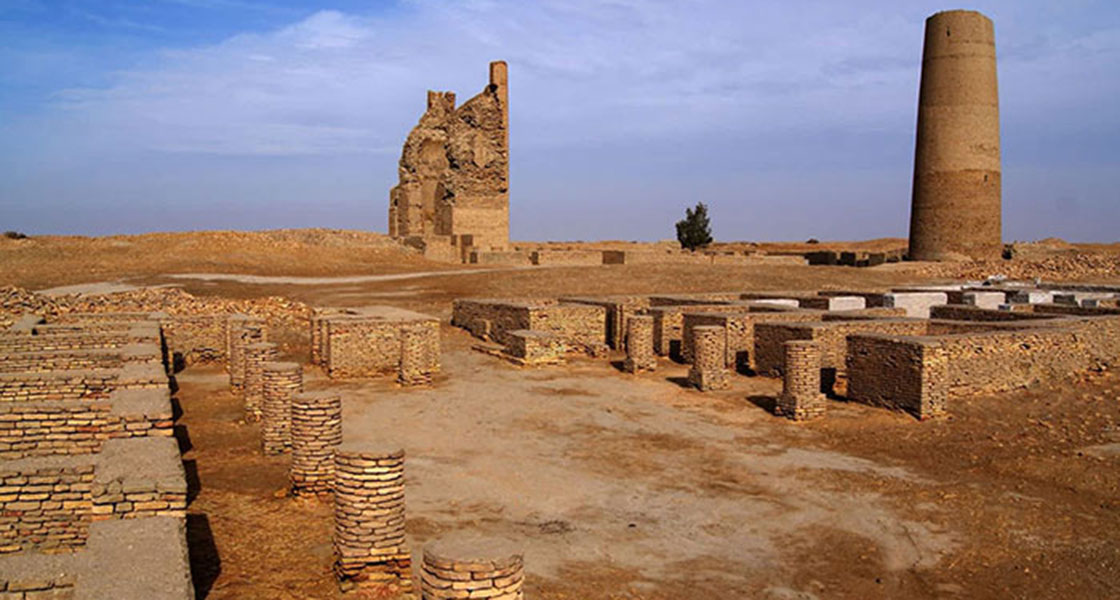
Dehistan, or Misrian, was a prominent medieval city located in the Balkan region of Turkmenistan. Flourishing from the 10th to 14th centuries, it served as a vital hub along the silk road, connecting the east and west. The city was strategically positioned between the Caspian sea and the Aral sea, facilitating trade and cultural exchange. Its significance is underscored by its inclusion on the UNESCO world heritage tentative list.
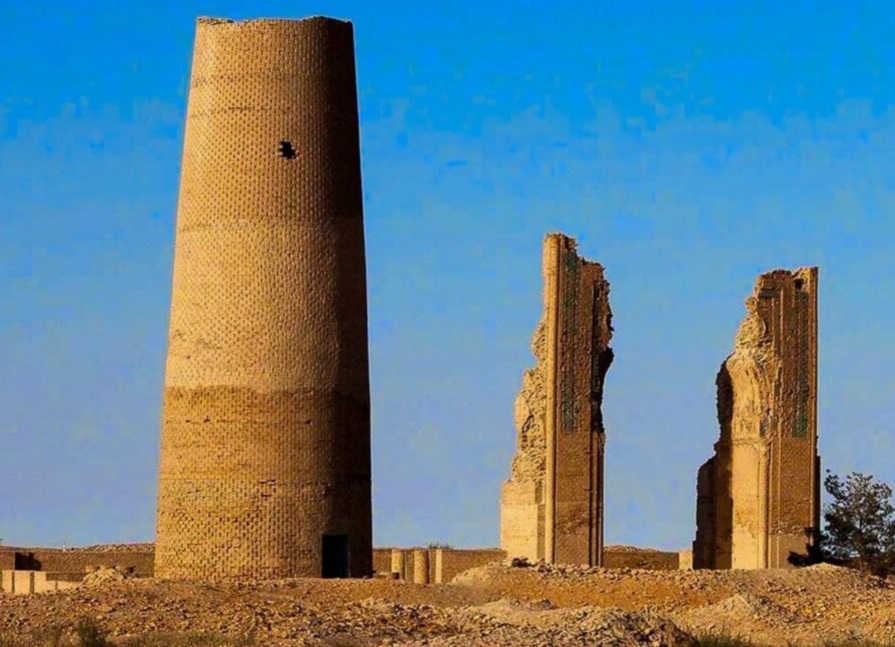
Dehistan’s architectural landscape is a testament to its historical grandeur. Notable structures include the mosque of Khorezmshah Mohammed, Of which only the twin columns of its main portal remain, standing at 18 meters tall. These columns are adorned with intricate brickwork and turquoise glaze, showcasing floral and geometric patterns.
The Abu-Jafar Ahmed minaret, Located approximately 120 meters from the mosque, was designed by Abu Bini Ziyad in the early 11th century. It features two rings of arabic inscriptions and a higher ring of geometric motifs, with a spiral staircase allowing access to the top. Excavations have also uncovered the bases of multiple caravansarays, which were essential for traders along the silk road.
Dehistan was divided into two main sections: Shakhristan, the fortified core of the city encompassing the citadel and key administrative buildings, and Rabat, the residential and commercial quarters where daily life and trade thrived. The city was protected by a dual ring of walls, ensuring its defense and control over the surrounding region.
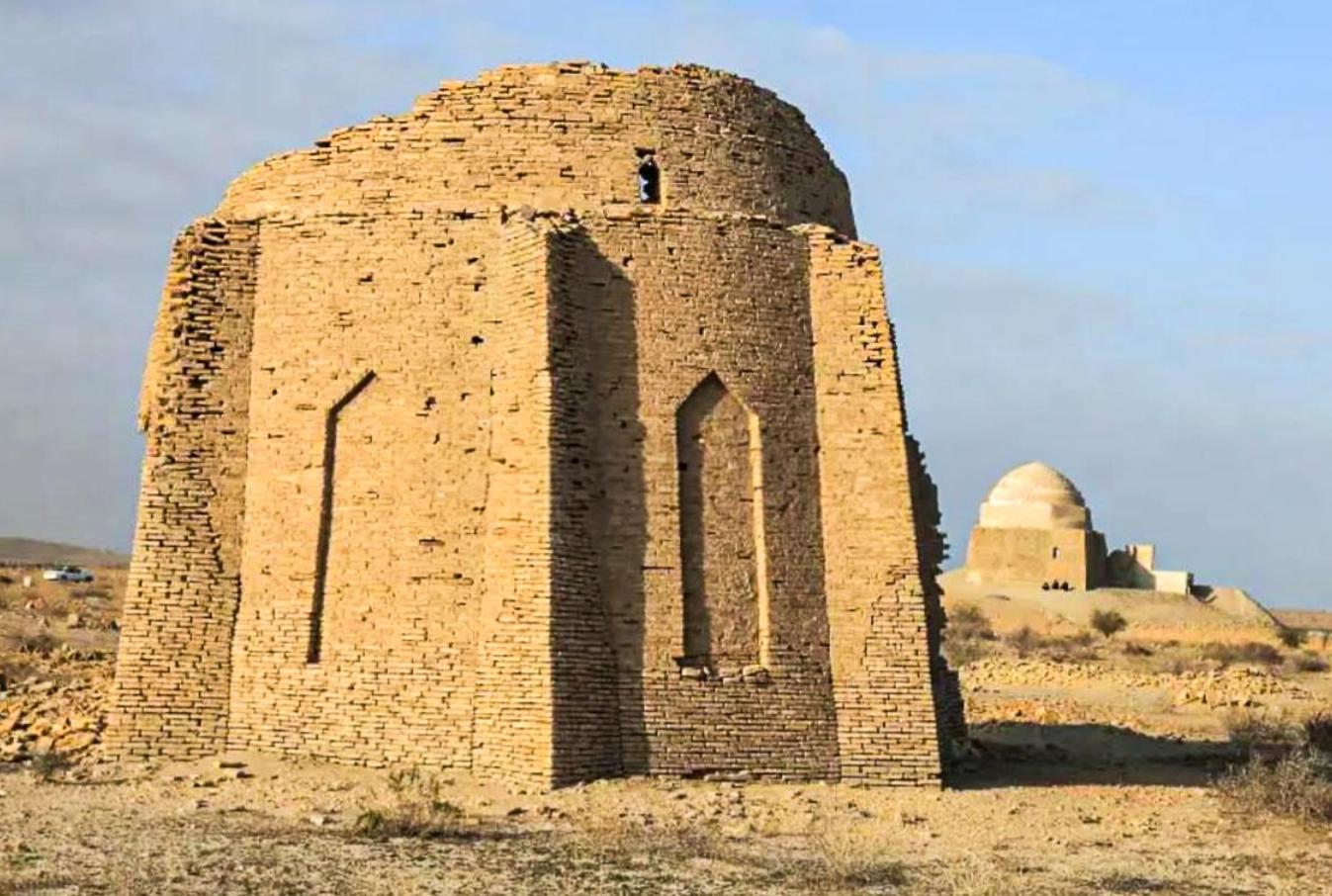
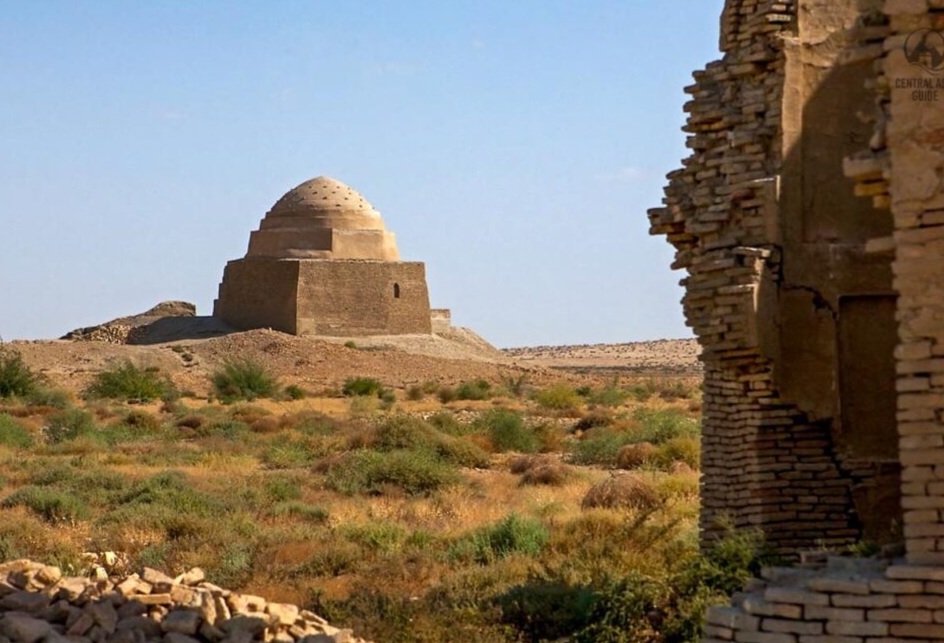
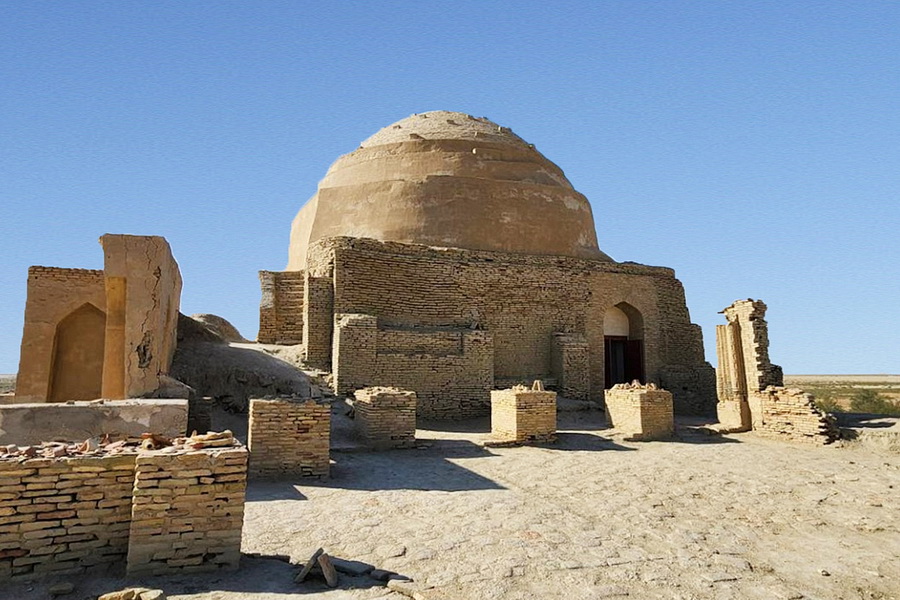
Dehistan is home to several mausoleums and religious sites. The Shir-kabir mausoleum is an early islamic structure dating back to the 9th or 10th century and is considered the oldest extant mosque in Turkmenistan. The mausoleum at Mashat form a medieval graveyard housing five mausoleums along a single line; in the 19th century, there were apparently about twenty. All of these are either circular or octagonal and lack domes.