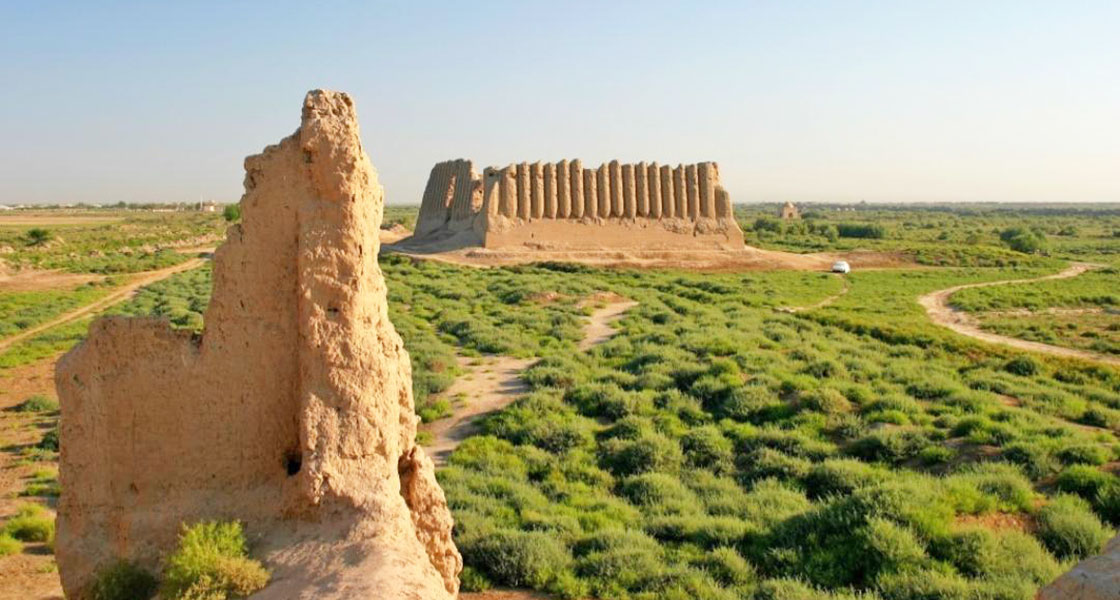
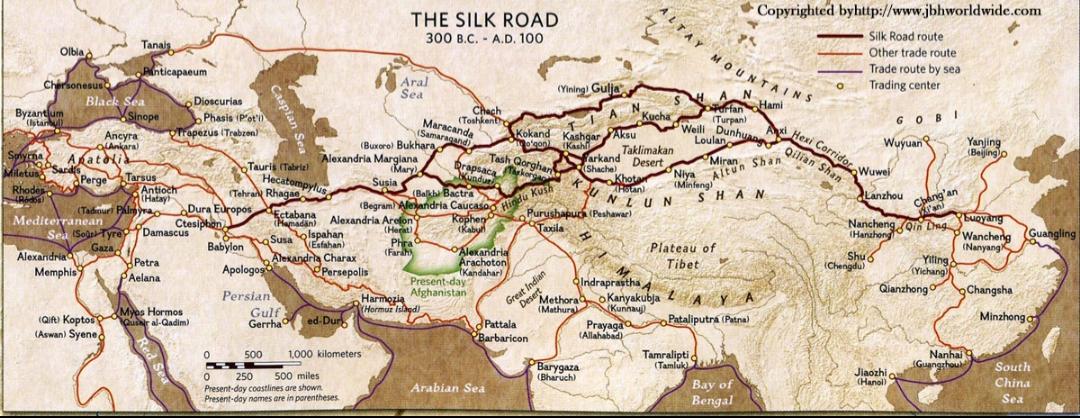
Once known as Margiana in the Achaemenid empire and later Alexandria Margiana under Alexander the Great, Merv’s strategic location on the Silk road ensured a steady flow of merchants, scholars, and conquerors. Over the centuries, it became a meeting point of Persian, Greek, Arab, Seljuk and Mongol worlds, behind echoes in its architecture language, and spiritual life.
Merv reached its Zenith during the Seljuk empire in the 11th and 12th centuries, when it was considered one of the largest cities in the world. Grand libraries, bustling bazaars, and serene gardens flourished behind its walls. Historians often call this period Merv’s “Golden age”. The city stood as a beacon of islamic learning and architecture, home to famous scientists, poets, and philosophers. One could almost hear the rhythm of scholars debating in the shade of madrasa courtyards, or the scent of spices and silk mixing in the market air.
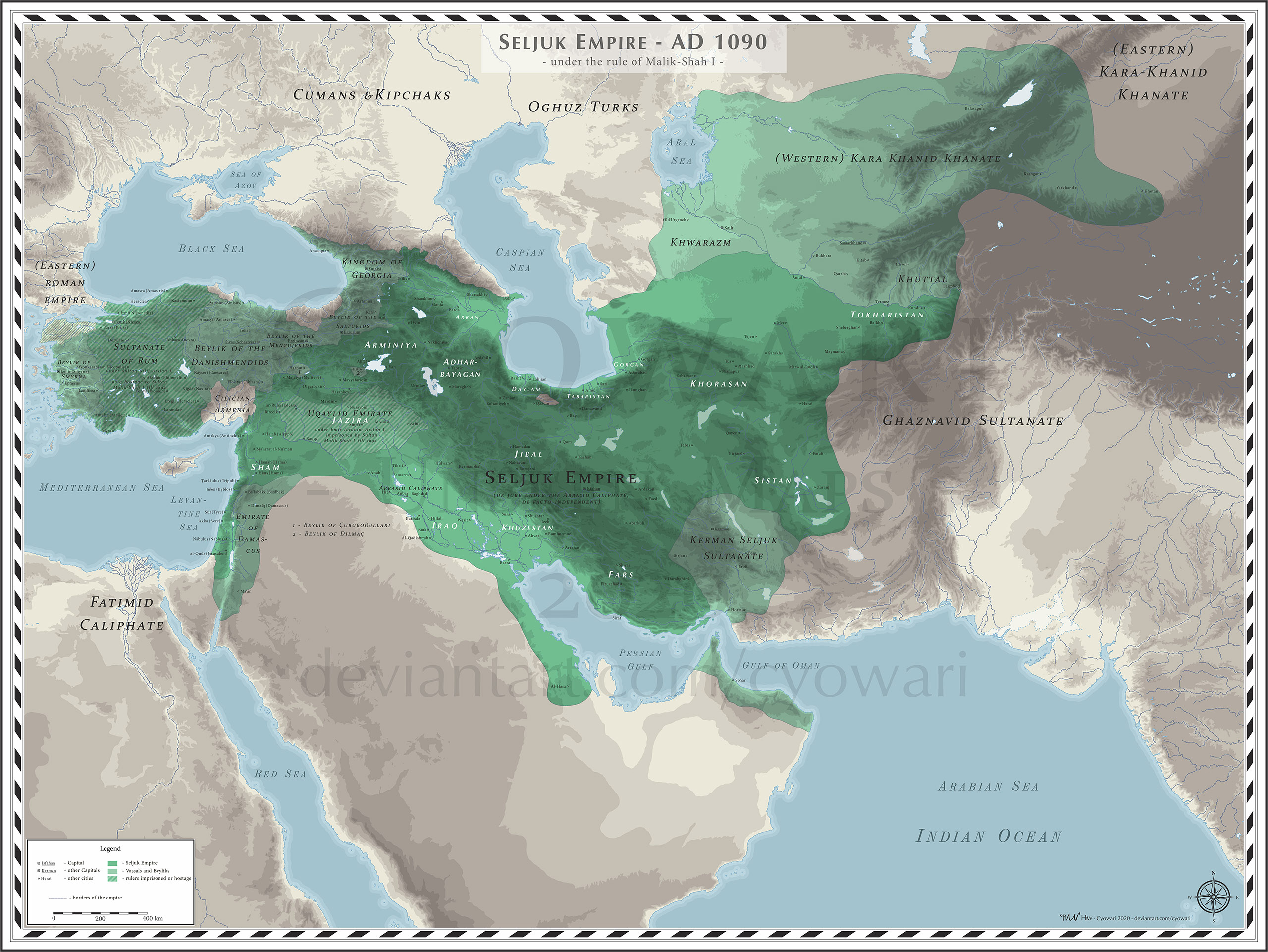
 But like many brilliant cities, Merv faced catastrophe. In 1221 the city fell victim to Genghis Khan’s Mongol armies, and one of the most tragic massacres in human history took place- over hundreds of thousands of people are said to have been killed. The destruction was so complete that Merv never fully recovered. Time and sand slowly covered the once-thriving metropolis, leaving behind haunting ruins.
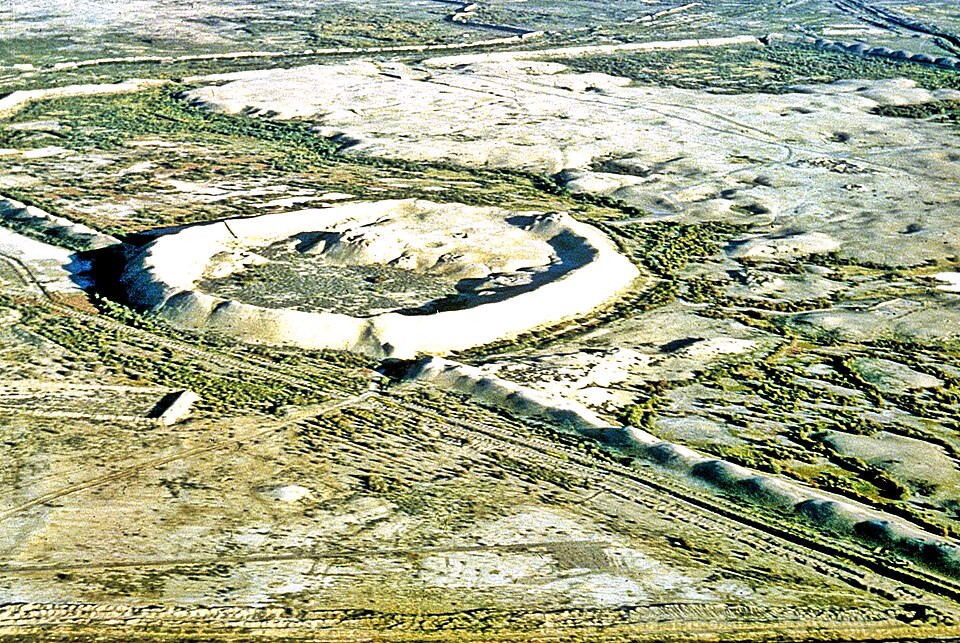
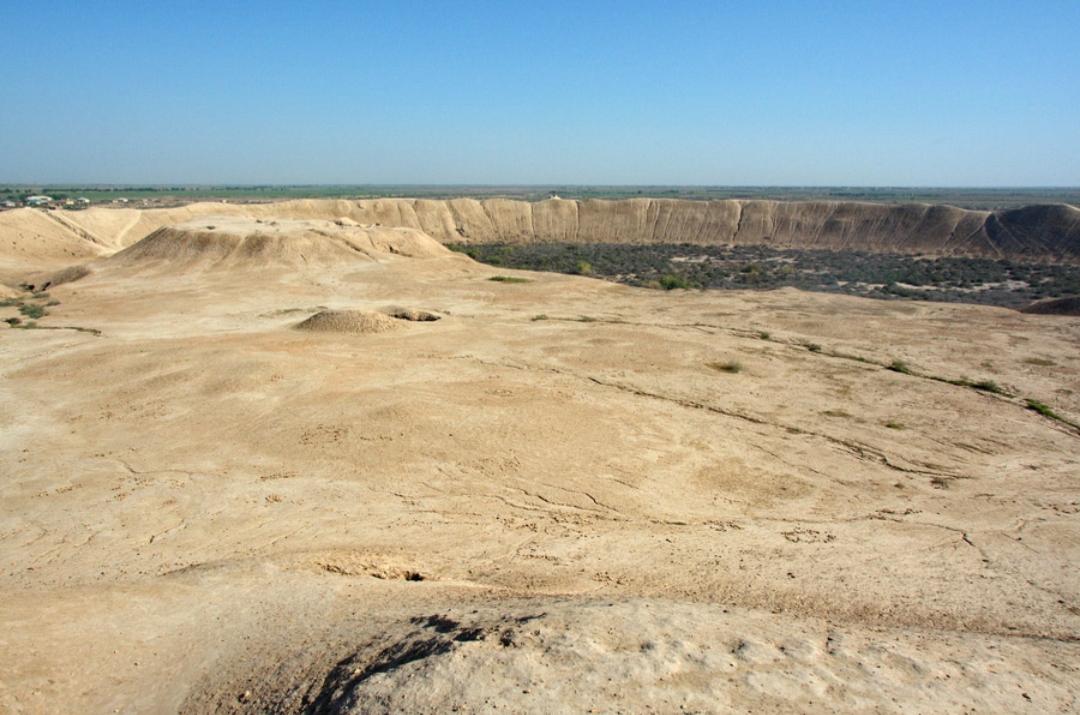
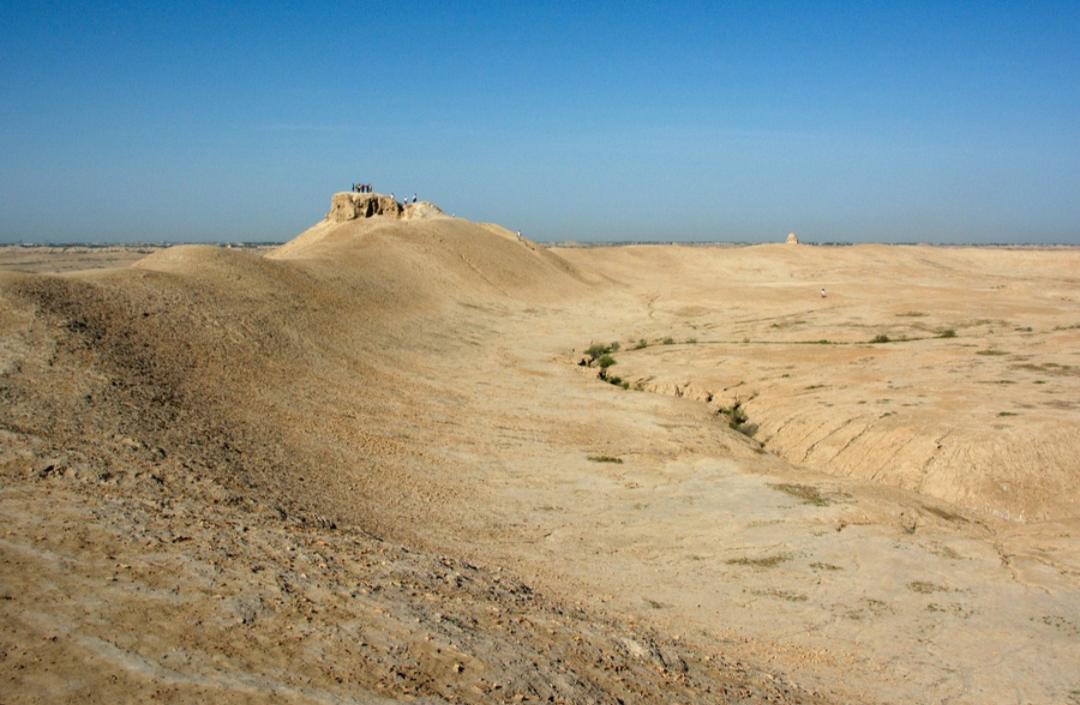
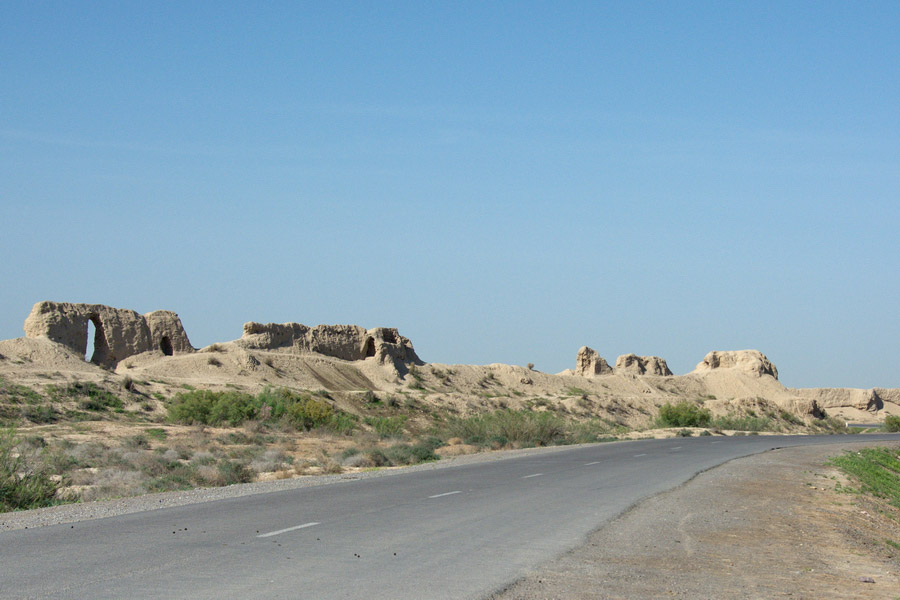 Adjoining the citadel lies the massive GYAUR KALA, Or “fortress of the infidels,” a testament to hellenistic might and later Zoroastrian and Buddhist presence. Constructed in the 4th–3rd century bce, its square perimeter spans over 300 hectares, enclosed by towering walls nearly 2 kilometers long, anchored by corner towers. Inside, archaeological evidence reveals bustling workshops, flour mills, and religious sanctuaries — offering glimpses into a thriving urban life.
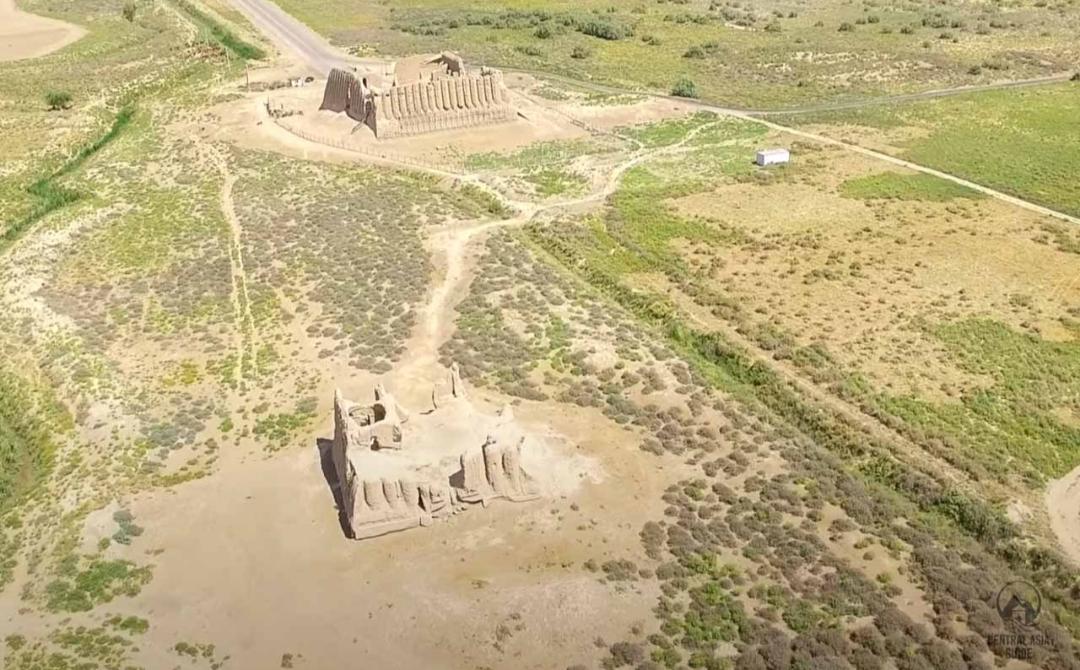
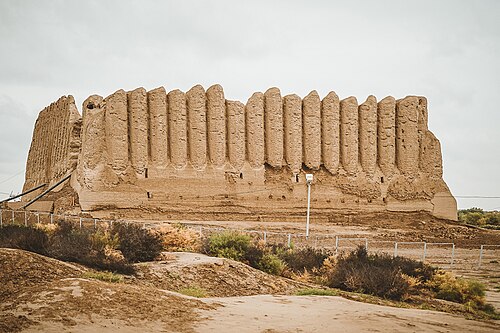
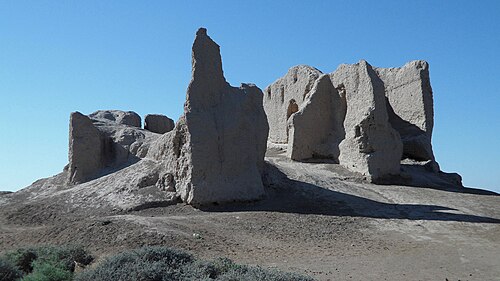 The Great Kyz Kala Is one of the most iconic and mysterious structures in Merv, easily recognized by its massive corrugated walls built from mudbrick in a style known as “corrugated masonry”. Believed to be the residence of a wealthy noble or governor from the 6th to 7th century, the fortress-like building once had two floors and a central courtyard, though its exact function remains uncertain. Standing strong against time and wind, the Great Kyz Kala continues to impress visitors with its unusual form and powerful presence on the open plain.
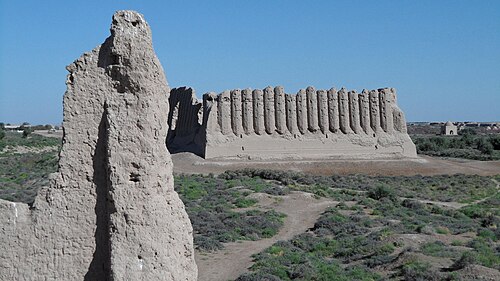 Located not far from the Great Kyz Kala, the Greater Kyz Kala is even larger in scale and was likely constructed around the same period, possibly serving a similar elite or defensive function. Though less well-preserved, its foundations reveal a complex internal layout with multiple chambers and fortified walls, suggesting it was once a heavily guarded and important site. The combination of massive size and unique design reinforces the impression that this area of Merv was home to powerful local rulers or governors before the Seljuk era.
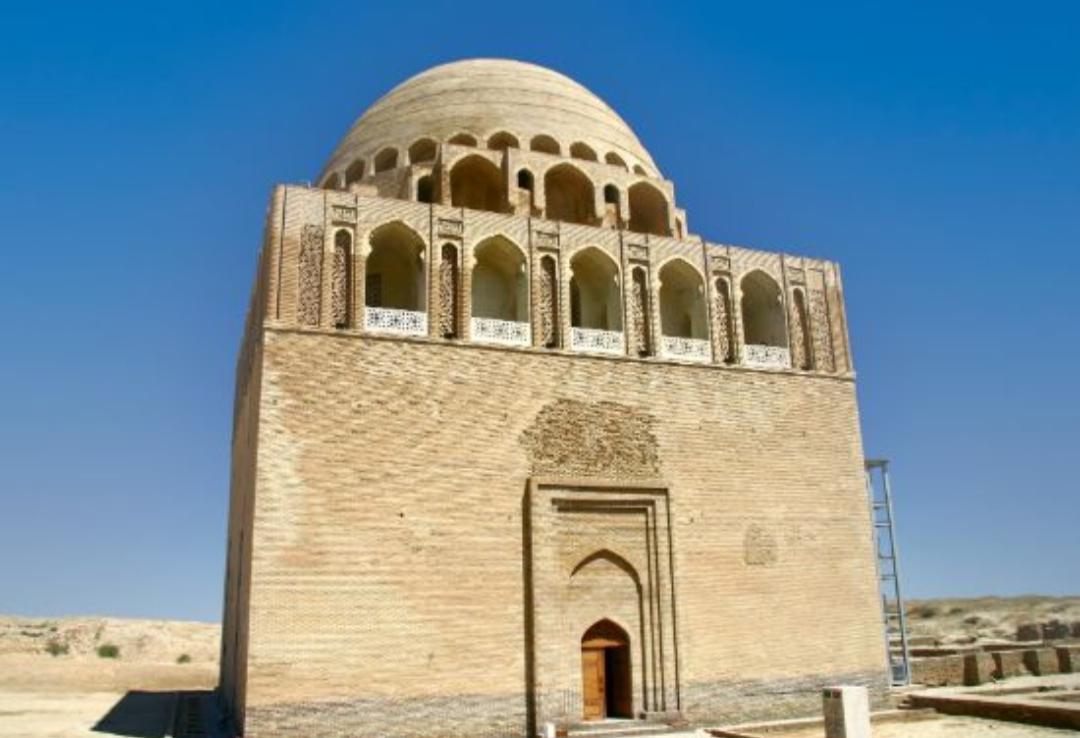
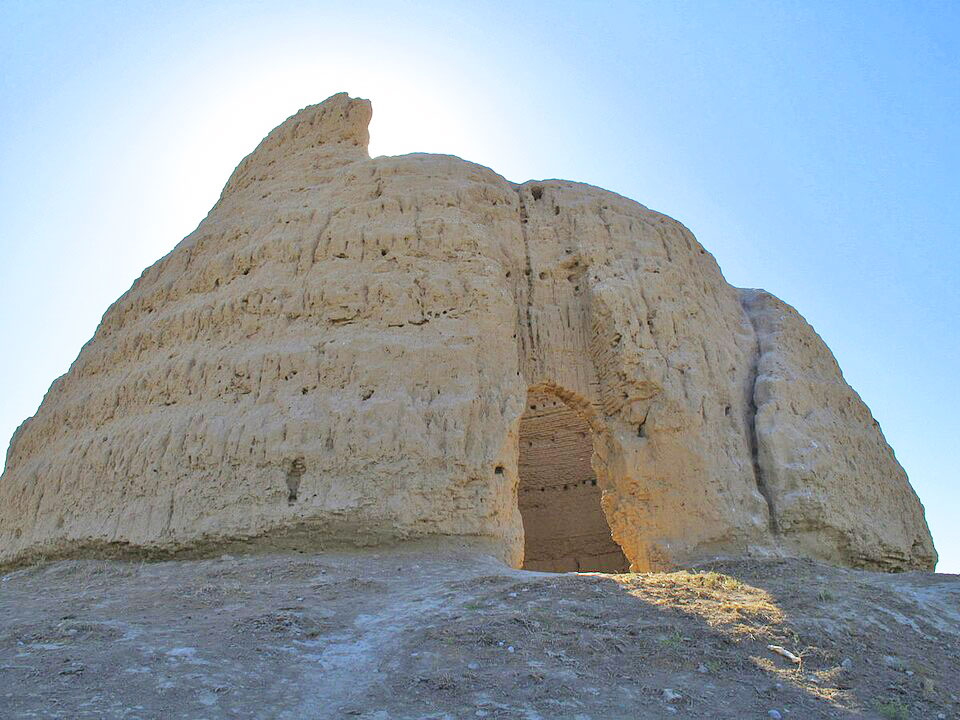 Sultan Kala – The heart of medieval Merv – was crafted in the 11th-12th centuries under the Seljuk empire, transforming the city into a fortified capital. Spanning over 400 Hectares, its imposing walls stretched nearly 9 km in Circumference, encircling A bustling urban core filled with mosques, markets, madrasas, caravansarais, and residences of the Elite. At its northeast lies the Shahriyar-Ark citadel, integrating administrative buildings, a ruler’s palace, and military barracks. Sultan Kala symbolized Merv’s cultural and political pinnacle during the Seljuk Golden age- its scale and planning reflecting a prime center of islamic governance and trade.
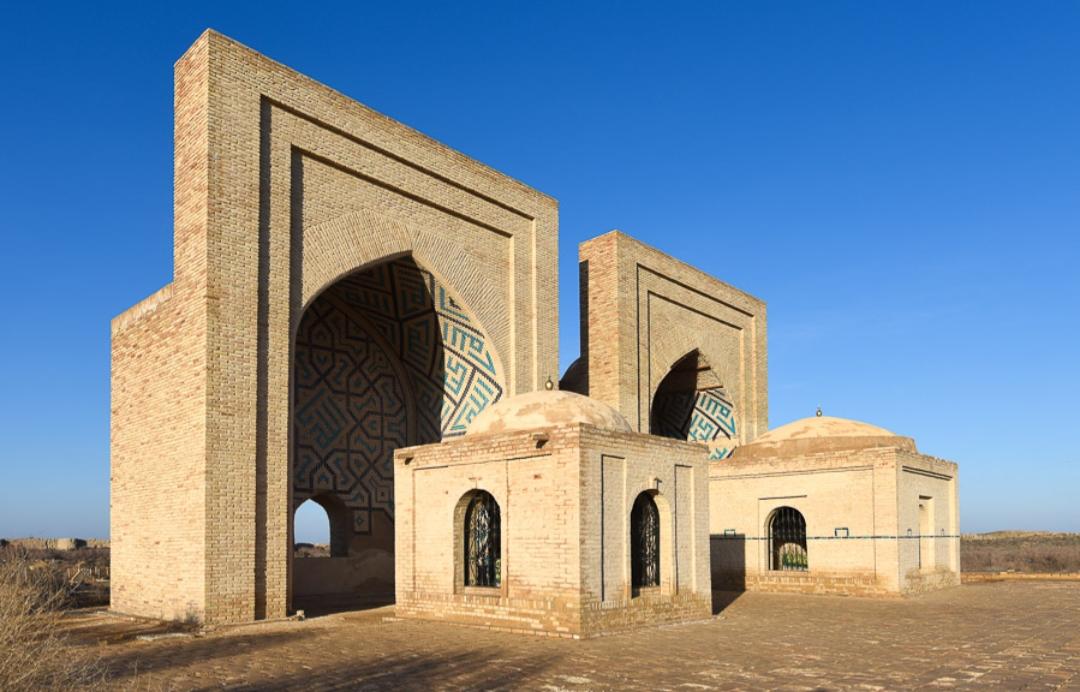 In the southern precincts of ancient Merv, about 300 meters south of Sultan Kala, lie the revered Askhab mausoleums—the final resting places of two esteemed companions of prophet Muhammad: Buraydah Ibn Al-Husayb al-Aslami (died 63 ah / 682–683 ce) and Al-Hakam Ibn Amr Al-Ghifari (Appointed governor of Khorasan in 665 CE, died 50 AH / ~670 CE in Merv) . Both were known as “Standard-bearers”: Buraydah Is famed for fashioning a temporary banner from his head-band—his first leadership symbol—upon entering Medina, while Al-hakam took on a vital military and administrative role when appointed governor under Umayyad rule.
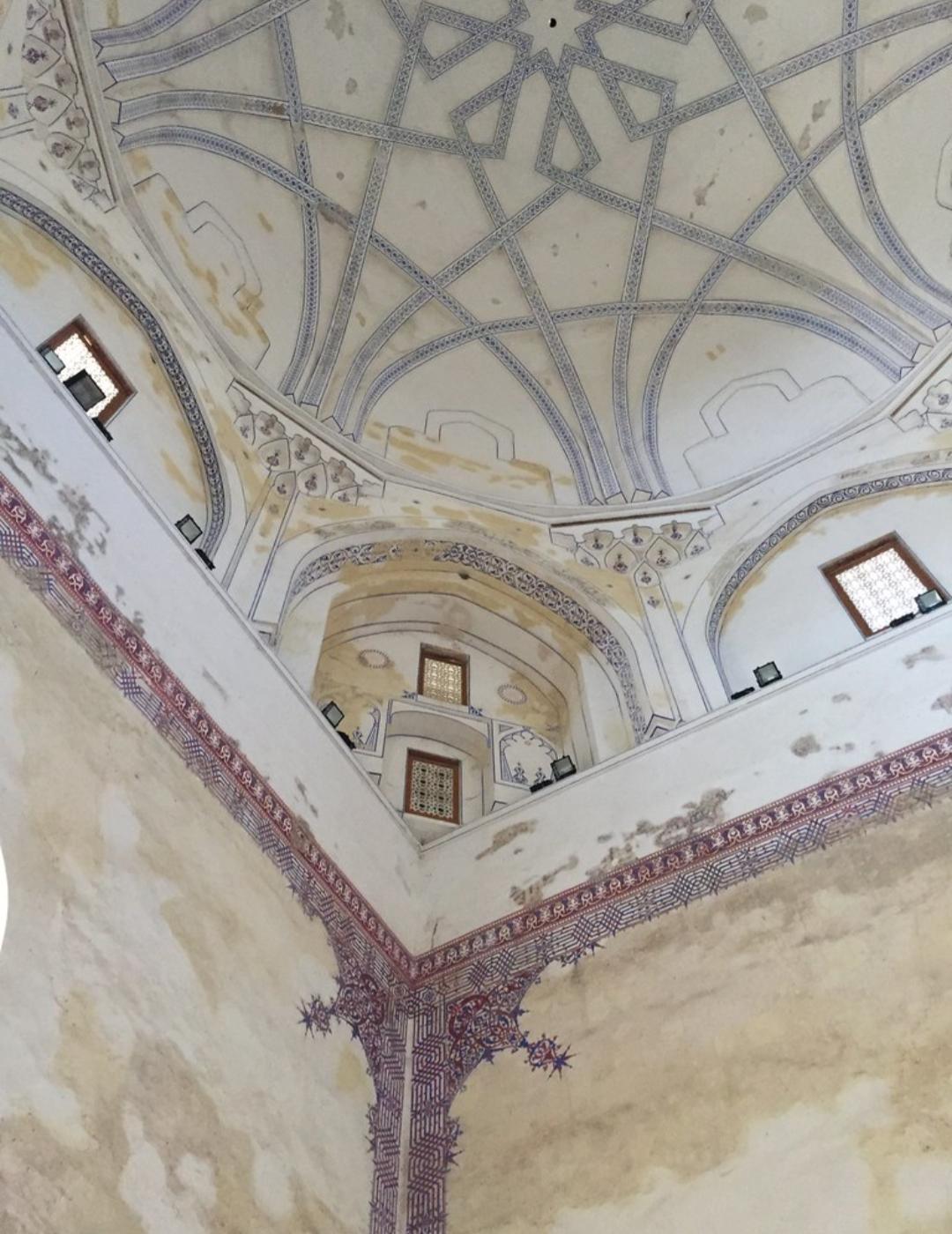
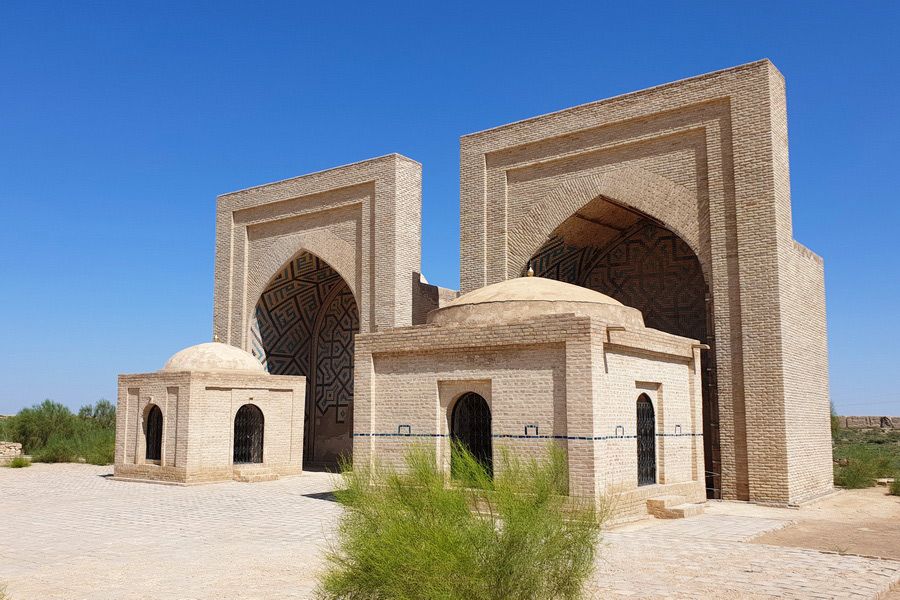 Originally interred in modest graves dating to the 7th century, their sites were later transformed during the Timurid era (15th–16th centuries) with grand Iwans—ornate vaulted gateways adorned in blue and turquoise—that now frame their twin domes. Each mausoleum houses a finely crafted black marble cenotaph, engraved with floral patterns and inscribed with their names, all beneath a wall bearing “Allah” In bold Kufic script. Despite periods of neglect—especially after the Mongol incursions—the shrine underwent restorations in 1914 and again in 2013 by Turkish conservators. A traditional Sardoba (domed water reservoir) nearby was built to accommodate visiting pilgrims. Today, the Askhab mausoleums remain a cherished pilgrimage and historical site, where generations continue to honor these noble companions.