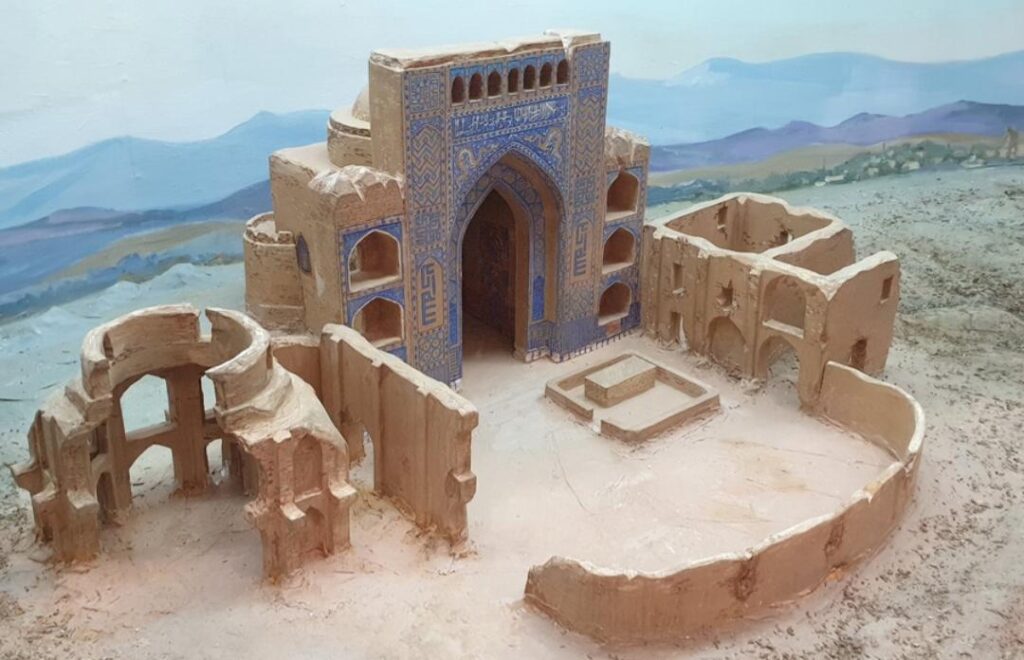
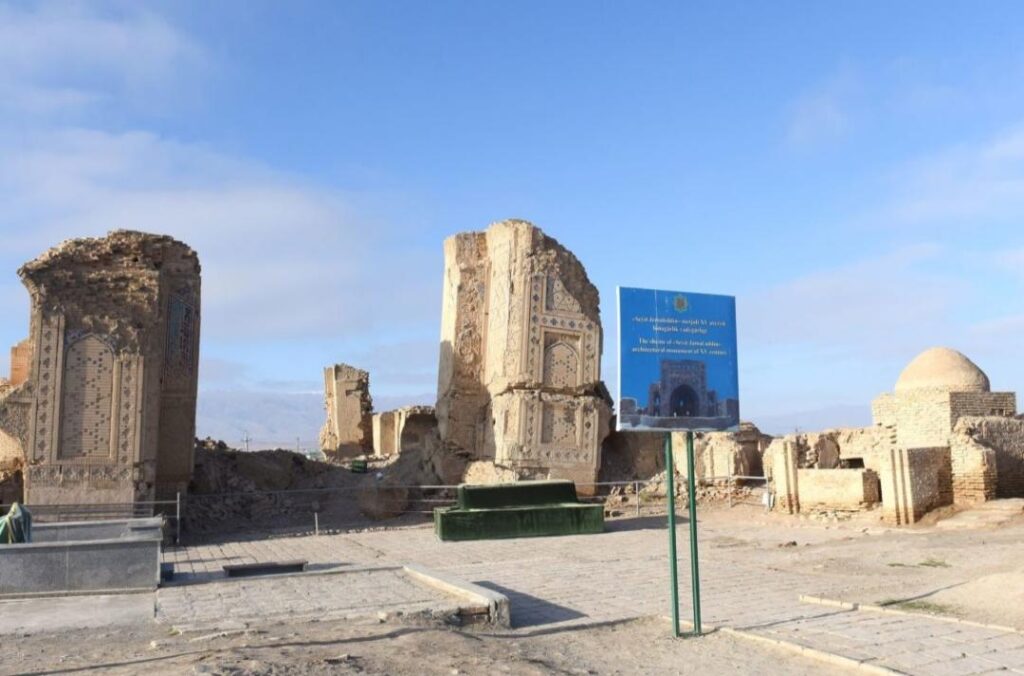
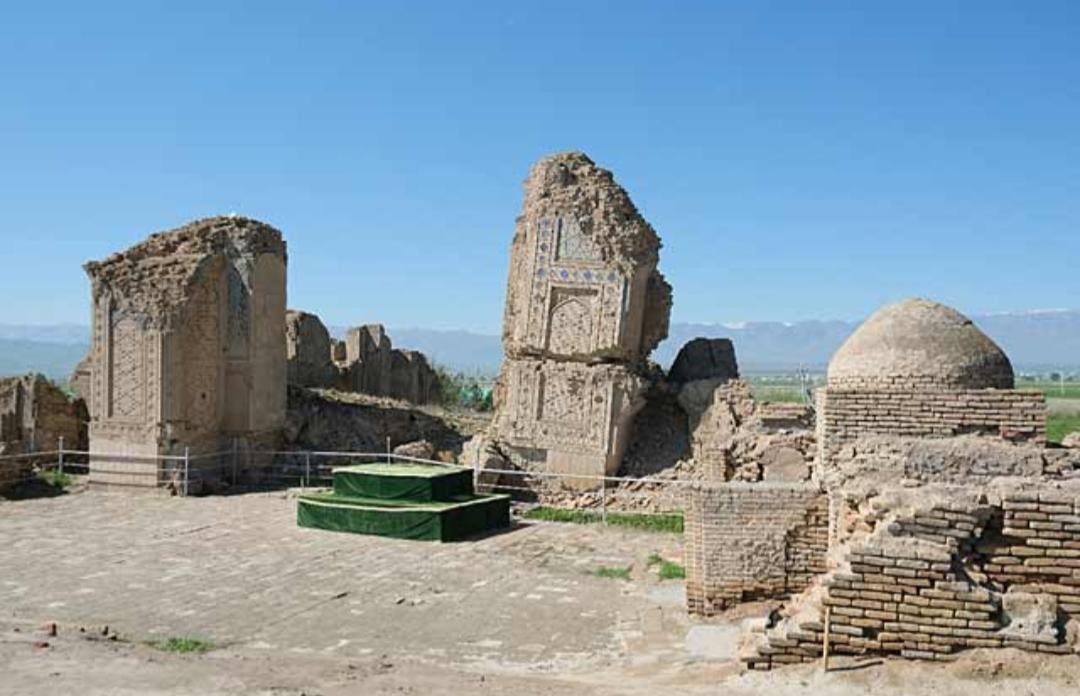
 In the heart of the Ahal region, just east of Ashgabat, lie the hauntingly beautiful ruins of the Seyit Jamal-Ad-Din Mosque. Once a jewel of Timurid architecture, this sacred site has stood for centuries as a witness to history, faith, and legend. Today, the crumbling portal and scattered bricks speak not of decay alone, but of resilience—a place where stories still echo through the desert wind.
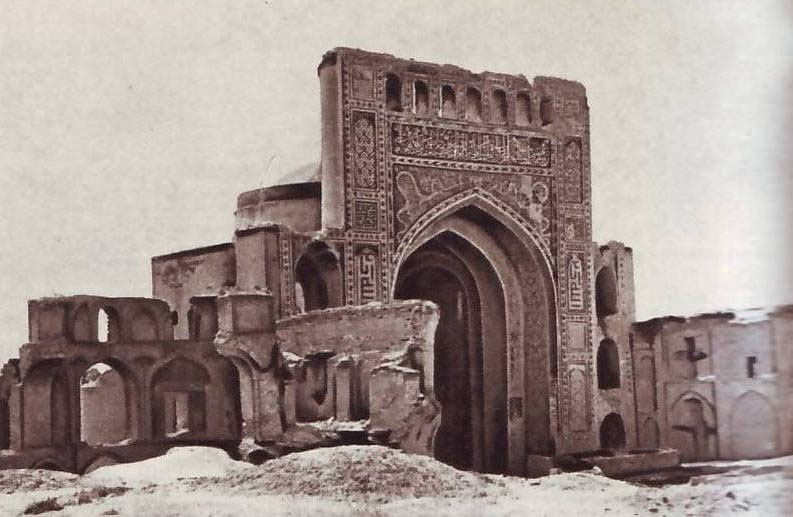 The mosque was commissioned in 1455–1456 by Muhammad Hudaydat, the vizier of the Timurid ruler Abu’l-qasim Babur, in memory of his father, the revered Sheikh Jamal-ad-din. It was part of a grand religious complex that included a mosque, a mausoleum, and domed chambers. In its time, the structure welcomed travelers, scholars, and pilgrims alike, serving both as a house of worship and a spiritual sanctuary.
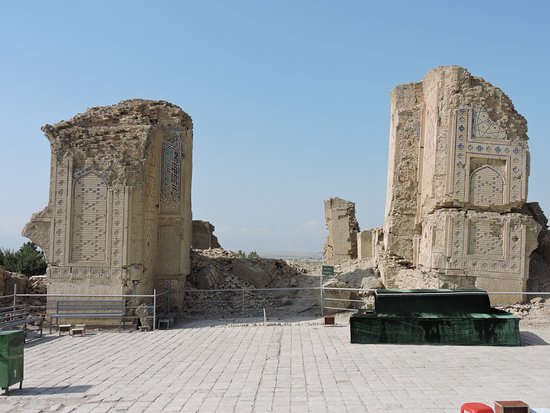 The most striking feature of the Seyit Jamal-ad-din Mosque was its entrance portal, adorned with an extraordinary mosaic of two golden dragons facing each other against a deep blue background. Such imagery is almost unheard of in islamic architecture of Central Asia, Making the site a rare and precious example of artistic fusion. The dragons, with their sinuous bodies and watchful eyes, were said to guard the mosque’s sanctity.
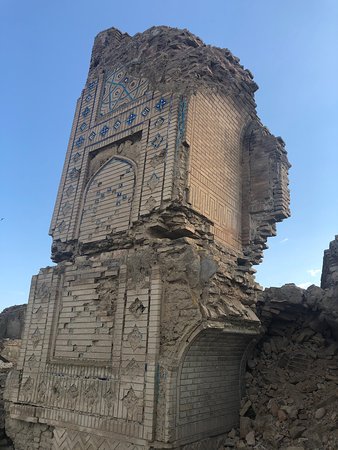 Local legend tells of a dragon that once rang a bell in a nearby fortress, seeking help. The people responded, and in gratitude, the dragon revealed treasures that would inspire the mosque’s construction. Some historians interpret the dragons as symbols of power and protection, possibly linked to the totemic heritage of Sheikh Jamal-ad-din’s tribe. Whether history or folklore, these stories continue to add depth to the site’s allure.